January 22nd, 2016

Adult patients who seek orthodontic treatment usually fall into one of two camps: those who did not undergo orthodontic treatment as a child or those who had braces at one point but stopped wearing retainers for one reason or another.
At Downey Orthodontics, we are happy to offer a variety of treatment options to straighten our patients’ teeth. Dr. Nathan Downey and our team believe you’re never too old to straighten your teeth. And we have many adult patients who are currently undergoing treatment. In fact, did you know that roughly 30 percent of all orthodontic patients these days are adults?
Invisalign® is a great treatment option for adults. The Invisalign aligners are easy to wear and are not visible to most people. Plus, Invisalign's clear aligners are removable, so there are no restrictions on what you can eat during treatment. When considering Invisalign, we tell adults to determine if they can be diligent about wearing the aligners at all times and make them part of their lifestyle for the duration of treatment.
If you have been thinking about obtaining a beautiful smile, please give us a call at our convenient Bowling Green, OH office for an initial consultation. Dr. Nathan Downey and our team welcome children, teens, and adults alike. Call us today for an appointment!
January 15th, 2016

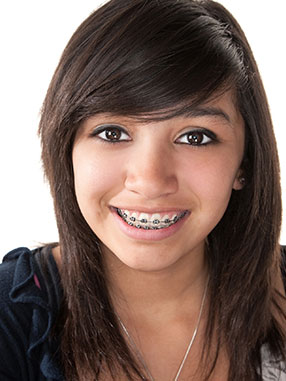
The stereotypical braces wearer – in middle school, with a mouth full of metal brackets – has led to numerous myths about orthodontics that discourage many people from getting the dental care they need. Dr. Nathan Downey and our staff would like to put some of these myths to rest.
Myth 1: Orthodontic treatment is for kids. Although teenagers often visit the orthodontist to get braces, adults represent a growing proportion of orthodontic patients. Whether you’re eight or 80, a consultation with an orthodontist can identify problems with your teeth, jaws, or bite that can be corrected by orthodontic interventions.
Myth 2: Traditional, metal braces are my only option. Advances in orthodontic technology have rendered improved braces and other orthodontic appliances that are much less noticeable than the braces of yesteryear. Ask Dr. Nathan Downey about Invisalign® braces and other options that make sense for your situation.
Myth 3: Orthodontic treatment is only helpful for crooked teeth. Sure, a crooked smile is a common reason that patients seek orthodontic care. However, orthodontic interventions help with a range of dental health problems. From missing teeth to overbite to jaw misalignment, your orthodontist can help with many problems associated with the teeth, gums, and jaws.
Myth 4: Orthodontic treatment is too expensive. As with any medical procedure, orthodontics can be pricey. However, our Bowling Green, OH team works with patients to find payment plans, insurance coverage, or other payment options that reduce the financial burden.
January 8th, 2016

One problem with trying to answer the question as to who benefits from Invisalign is that the simple answer is “almost everyone.” The see-through, almost invisible aligners for straightening teeth are specifically molded to fit each individual’s mouth. Unlike conventional braces, they can be removed when eating and when cleaning the teeth. Because they use less force in straightening teeth than metal braces, the risk of harm to teeth is lessened.
Benefits to adults
Traditional braces are associated with children and teenagers. Many adults want to have their teeth straightened but cannot decide which is worse: having crooked teeth or wearing metal braces. They also worry about having to change their diet by not being able to eat the foods they normally enjoy.
If you are an adult considering braces, our team at Downey Orthodontics will tell you Invisalign aligners will give you the best of all worlds. Your teeth will be straightened with virtually invisible braces. You can remove your aligners when you eat so you can enjoy any food you normally would consume. You do not have to worry about embarrassing yourself by getting food stuck in your braces. You simply clean your teeth normally after eating and replace your aligners. If there is a special occasion during which you do not want to have any braces at all, you can remove the aligners for a few hours without causing any damage.
Benefits to teenagers
Dr. Nathan Downey and our team know that teenagers are often involved in contact sports or gymnastics. Others find that having metal in their mouth interferes with their ability to play a musical instrument. Traditional metal braces contain wires and brackets that can cause damage to the mouth and gums; this is not a risk with Invisalign aligners.
For sports that require players to wear mouthguards, the expense of specially constructed mouthguards to fit over braces is avoided. The aligners can be removed during sports activity, and a normal mouthguard is worn. Teenagers who play musical instruments simply remove the aligners when practicing or playing in the band or orchestra.
Teenagers often feel they are too busy to spend time and trouble flossing teeth between the wires and brackets of traditional braces. Since the Invisalign aligners are removable, brushing and flossing are simpler and more likely to be performed.
For more information about Invisalign or Invisalign Teen, or to schedule an initial consultation with Dr. Nathan Downey, please give us a call at our convenient Bowling Green, OH office!
January 1st, 2016

Watching the clock tick down the final seconds until midnight, many of us- Downey Orthodontics included- feel nostalgic about the passing year and hopeful about the new one to come. New Year’s Eve is one of the most widely celebrated holidays in the world, with over-the-top celebrations taking place in dozens of countries. The Gregorian calendar, which is widely used in Western nations and around the world, was implemented in 1582. Since that time, December 31st has marked the final day of the year, with midnight heralding the beginning of a brand new year. In the United States, New Year’s Day is a public holiday; government offices, schools, public organizations, and many businesses are closed for the day. Ponder the following fun facts as you think about your plans for the holiday:
- Approximately one billion people watch the New Year’s Eve ball drop in Times Square, New York City. This televised event is one of the most iconic New Year’s celebrations in the world. For many years, watching the ball drop meant tuning in to Dick Clark’s Rockin’ New Year’s Eve, an iconic television special dear to the hearts of many viewers.
- The idea for the New Year’s Eve ball came about because of a citywide ban on fireworks. Before 1907, when fireworks became illegal in New York City, celebrations included an elaborate fireworks show. The large, glittering, illuminated ball was developed as an alternative. Although the first ball was heavy at 700 pounds, the modern New Year’s Eve ball is made of Waterford crystal and tips the scale at six tons!
- The top five New Year’s resolutions are: to lose weight, quit smoking, get a new job, return to school, or increase personal savings. However, approximately 88% of New Year’s resolutions fail. But don’t let that discourage you! Resolutions are most likely to succeed when they are clear, achievable goals. Setting out a concrete plan to achieve your resolution also boosts your chances of success.
- Eating black-eyed peas on New Year’s Day is said to bring good fortune in the new year. Collard greens, cabbage, and ham hocks are also considered lucky foods to enjoy. Just steer clear of the chicken or turkey dinners; eating poultry is a bad omen for the year to come.
Whether you plan to stay in Bowling Green, OH, or head out into the crowds to watch the ball drop in Times Square, New Year’s Eve is a time to enjoy friends and family. Send your loved ones well wishes for the New Year, and look for that special someone to share a midnight kiss with for good luck!


 Website Powered by Sesame 24-7™