
Call Our Office To Schedule

Our Blog

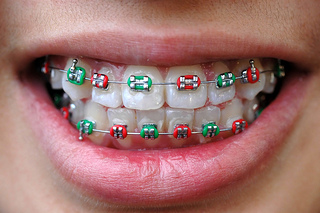
What makes teeth crooked?

September 9th, 2016

Dr. Nathan Downey and our team hear this question a lot. Some of the common reasons for crooked teeth include:

  • Thumb sucking
  • Tongue thrusting or improper use of the tongue during speaking and swallowing
  • Premature loss of baby teeth, which causes teeth to drift and shift
  • Poor breathing airway caused by enlarged adenoids or tonsils

There are also hereditary factors we get from our parents, like:

  • Extra teeth
  • Large teeth
  • Missing teeth
  • Wide spaces between teeth
  • Small jaws

Dr. Nathan Downey and our team know that having crooked teeth isn’t just a cosmetic issue; it can lead to serious health problems as well. Crooked teeth can:

  • Interfere with proper chewing
  • Make keeping teeth clean more of a challenge, increasing the risk of tooth decay, cavities, and gingivitis
  • Strain the teeth, jaws, and muscles, increasing the risk of breaking a tooth

There are several treatment options we offer at Downey Orthodontics that can help correct crooked teeth. Please give us a call at our convenient Bowling Green, OH office to learn more or to schedule an initial consultation.

Happy Labor Day!

September 2nd, 2016

Labor Day is upon us, and that means the non-official end to summer. Before the kids head back to school and temperatures start to cool down, this is your last chance to barbeque in the beautiful Bowling Green, OH community, head to the lake, and wear your favorite pair of white pants.

About Labor Day

Each year, Labor Day is celebrated on the first Monday of September. It is the one day of year Americans celebrate their achievements in work, which the US Department of Labor says has contributed to prosperity and well-being of America as a whole. Americans have been celebrating Labor Day since the 1880s, and today it is an official federal holiday.

Interesting Facts About Labor Day

  • Every year, more than 30 million Americans travel over Labor Day weekend.
  • Canada was the first to celebrate Labor Day, and the US soon followed.
  • President Cleveland made Labor Day and official US holiday in 1894.
  • Labor Day marks the beginning of the NFL and NCAA sports seasons for fans.
  • Labor Day marks the end of hot dog season, when Americans consume seven billion hot dogs.

Thanks for being a valued patient of our Orthodontist office. Our staff would like to wish you a safe and happy Labor Day weekend. Enjoy your time off!

How long after my braces come off should I wear my retainer?

August 26th, 2016

Braces are an investment in your smile. When your teeth reach a desired straightness, you’ll have a beautiful smile, but it’s important to keep it that way! You can accomplish this with a retainer provided by Downey Orthodontics.

A retainer is a small, custom-fit device that reinforces the new position of your teeth after your braces are removed. But for many patients, especially the youngest ones, wearing a retainer may seem like an annoyance. So exactly how long after your braces come off should you wear your retainer?

Graduation of Wear Time

When we remove your braces, Dr. Nathan Downey will evaluate the condition of the bone structure surrounding your teeth and determine how well it is adjusting to the new position of your teeth. For the first few months, we may require you to wear your retainer both day and night, except during meal times and for brushing and flossing.

As the bone and gum tissues adjust to your new smile, we may determine that you need to wear your retainer only at night. After about one year of wearing the retainer every night, you may be able to take a couple of nights off each week.

However, we do not recommend ever stopping permanently. To best secure the position of the teeth, especially through future extractions and oral health changes, wearing your retainer a few nights a week will be necessary for many years.

Considerations

If you are concerned about your appearance when you wear a retainer, there are many that can be worn discreetly. You could choose a clear plastic one that is less obvious during the months immediately following removal of your braces. When you change to night wear only, clear wire retainers are available for minimal visibility as well.

Another option is a lingual retainer. It is placed on the back sides of your teeth so no one will ever know it is there! Lingual retainers are also permanent, so there’s no risk of losing them.

Remember, wearing your retainer is an investment in your smile. If you fail to wear it consistently, the tissues that support your teeth will be unsupported, and you may begin to experience noticeable shifting. You’ve worked hard to get that beautiful smile — your retainer will let you keep it! Remember to call our Bowling Green, OH office if you have any questions about your retainer!

TMD Problems and How You Can Prevent Them

August 19th, 2016

Temporomandibular joint disorders (TMD) describe a set of conditions that involve trouble with your jaw and face muscles. They result from a problem in the temporomandibular joint (TMJ), which is a hinge that connects the temporal bones, in your skull in front of each ear, to your jaw. The joint enables you to talk, yawn, and chew by letting your mouth move.

TMD can be very painful and interfere with functions such as eating and speaking. This what to watch for and how to try to prevent TMD.

Risk Factors for TMD

You are at higher risk for TMD if you are a women than if you are male. The disorder is most common among adults between the ages of 20 and 40 years. Other risk factors for TMJ disorders include the following.

  • Arthritis in the area, making movement more difficult
  • Excessive tooth grinding, because it increases stress on the joint
  • General stress, which can lead you to clench your teeth and strain facial muscles

Symptoms of TMD

Symptoms of TMD can last for just a short while, or for several years. Seeing Dr. Nathan Downey is important if your symptoms make it impossible for you to eat regularly or if you have unbearable pain or discomfort. The following symptoms can occur on both or one side of your face.

  • Aching or very tired facial muscles
  • Jaws that are fixed open or shut without you being able to unlock them
  • Grating or popping sounds when you chew or close or open your mouth
  • Pain in the entire area, including the mouth, jaw, neck, or shoulders, that comes on when you chew or yawn

Preventing TMD

You can try to prevent TMD by focusing on reducing risk factors. If you grind your teeth at night, ask Dr. Nathan Downey about wearing a mouthguard. If you are overly stressed, look into ways to better manage your stress and relax your muscles. Another strategy for trying to prevent the development of TMD is to avoid chewing gum, since that puts stress on your jaw.

If you have questions about TMD, don’t hesitate to contact our Bowling Green, OH office.

Back To Top