Call Our Office To Schedule

Our Blog

How to Care for Your Invisalign® Aligners

November 13th, 2015

Is it possible to straighten the teeth without braces? Yes, it is. Welcome to the world of Invisalign aligners. Invisalign aligners are made from a clear, thermoplastic material that is custom made to fit your teeth. Unlike conventional braces, Invisalign aligners are removable. More importantly, the clear thermoplastic material makes the aligners invisible, which is ideal if the thought of metal braces and elastics make you self-conscious. For the best results, proper handling and care of your Invisalign aligners is important. Follow these steps to take care of your aligners:

1. Do not eat or drink hot beverages while wearing aligners. It's a good idea to get in the practice of removing the aligners before eating and drinking. Because the aligners are made of plastic resin, heat can distort and damage them. Also, eating while wearing the aligners will cause sugar and other food particles to stay on your teeth, which contributes to plaque and tooth decay.

2. Clean the aligner trays regularly. Invisalign aligners are exposed to the same bacteria and plaque that your mouth is, so you need to clean them as regularly as you clean your teeth. However, avoid cleaning the aligners with harsh chemicals. We recommend using a cleaning kit or some other type of specific solution. When it comes to cleaning Invisalign aligners, carefully follow the instructions given by Dr. Nathan Downey.

3. Store aligners in a cool, dry, safe place. When you’re not wearing the aligners, store them in the case provided by our office. If you don’t use the case, they can easily be lost. Keeping them out of reach of small children and pets is also a good idea. The last thing you want is for Fido to think your Invisalign aligners are chew toys.

4. Don’t chew gum while wearing aligners. There’s one thing that conventional braces and Invisalign aligners have in common: chewing gum damages both of them.

5. Don’t soak aligners in mouthwash. Many popular mouthwashes contain a color pigment. It’s possible that soaking Invisalign aligners in mouthwash will tint or stain them.

For more tips and tricks for a successful Invisalign experience, contact our Bowling Green, OH office!

How Braces Can Work at Any Age

November 6th, 2015

Are you an adult who is considering getting braces? Perhaps you’ve had them before, but over the years that dental work has been reversed. Or maybe you’ve never had any orthodontic work done, but are considering braces for the first time. In either case, Downey Orthodontics can help you enjoy straighter teeth, an improved bite, and a more beautiful smile. If you are considering getting braces, here is what you need to know about adult orthodontic work from Dr. Nathan Downey.

Can braces work for adults?

Absolutely! Braces work for just about anyone. However, there are several different types of braces, and not all of them may work for you. Different types of orthodontic treatments include:

  • Ceramic braces
  • Metal braces
  • Self-ligating brackets
  • Lingual brackets (braces behind the teeth)
  • Invisible braces
  • Rubber bands for bite correction
  • Headgear and other appliances

By scheduling a consultation, we can determine which treatment or combination of treatments would be best for your specific needs.

How do I get started?

Getting braces can be a little bit daunting. At first glance, the process may appear expensive and time-consuming. However, if you take it step by step, getting braces can be a simple and relatively pain-free experience. Here are the first steps you need to take to get on the road to straight teeth:

First, you need information. If you are nervous about getting braces, or are having trouble getting started, learning more about the process can help ease your mind. Here are a few sample questions to ask:

  • What kind of braces do you recommend for my teeth?
  • How long will the treatment take?
  • How often will I need to come in for adjustments?
  • What is the total cost of the treatment? Do you accept insurance? Will you require the full amount up front, or do you have payment plans?

Asking these types of questions will help you understand what to expect during the entire process, which can aid your decision on the proper course of action.

The next step is to complete any prerequisite treatment. During your first meeting with Dr. Nathan Downey, we’ll need to take some X-rays and molds of your teeth, and then help you determine an appropriate treatment plan. Recommendations may include some preliminary dental work before you get your braces, which can be an important step in making sure your orthodontic treatments are effective.

Once you have completed these steps, you are ready to get started! After you’ve chosen a treatment plan and undergone any necessary prerequisite dental work, you’ll be able to get your braces. Just like that, you’re on your way to a better smile! If you’d like to get started right away, call our Bowling Green, OH location today!

Halloween Fun with Braces

October 30th, 2015

Halloween is a favorite holiday among children due to the festive games, imaginative costumes, and candy. Modern celebrations stem from a combination of traditions from Pagan and Christian traditions throughout the centuries. The original holiday was called Samhain and derived from the ancient Druids of Ireland. In their belief system, November 1st marked the beginning of winter, and Pagans began their Samhain celebrations at sunset on October 31st.

Modern Celebrations of Halloween

Children and adults love dressing up for Halloween, and this tradition comes from the ancient belief in spirits. From sunset on October 31st until sunrise on November 1st, the souls of the dead entered the physical world. Some spirits were benevolent and wanted only to cross over to the afterlife while others harbored malicious intents of revenge and trickery. Pagans wore masks and disguised themselves so that the malevolent souls would mistake them as fellow spirits.

Families left food and ale outside of their doors to appease the spirits. With the rise of Christianity in Europe, the church encouraged its members to offer food and money to beggars. In exchange, the beggars would agree to pray for the family's deceased loved ones. Eventually these traditions led to the development of today's customs where children dressed up and received candy from their neighbors while circling the community.

Teeth-Friendly Treats

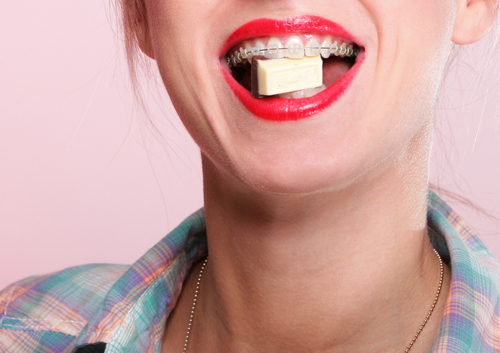
With all of the excitement and free candy on Halloween, it is easy to get carried away on a sugar high. Parents warn their children not to eat too many pieces in one night to avoid tummy aches and cavities. Our team at Downey Orthodontics especially wants to remind children with braces to be extra cautious about the treats they eat because some varieties can get stuck in between the brackets and damage the devices. Sticky candy, such as caramels, fruit chews, and gum should be avoided when wearing braces. Children can trade with their friends and siblings to get only safe candies. The following list offers some alternative treats that children with braces can safely enjoy.

  • Solid chocolate, including milk, white, or dark
  • Nougat-filled candy bars, such as Three Musketeers
  • Candy-coated chocolates like M&Ms
  • Powdery candy, such as Sweet Tarts or Pixie Stix
  • Mint-flavored candy
  • Malted milk balls
  • Cookies
  • Peanut butter crackers or cookies

When in doubt, children should ask their parents or Dr. Nathan Downey if a specific candy is safe. Halloween is a fun holiday for children, and having braces does not have to take away any of the excitement from tasty treats.

Invisalign® vs. Traditional Braces

October 23rd, 2015

A great smile can go a long way. Scientific research suggests that people who smile are perceived as more attractive and confident than those who don’t flash their pearly whites. When it comes time to invest in orthodontics to improve your beautiful smile, choosing the best option can be daunting. Comparing Invisalign to traditional braces is a great way to determine what orthodontics make most sense for your unique smile.

How is Invisalign different?

Unlike traditional braces, in which brackets are affixed onto each tooth and connected by wires Invisalign corrects orthodontic problems using a set of clear trays. These trays are specially formed to fit your teeth, allowing you to wear them 24/7.

Aesthetics

One of the primary advantages of Invisalign is that the clear trays are nearly invisible. Particularly for adults self-conscious about appearing professional with traditional braces, Invisalign can correct orthodontic issues without capturing the notice of others. Their nearly invisible appearance is one of the topmost reasons that orthodontic patients choose Invisalign.

Complexity of the Orthodontic Problem

Invisalign works well for people who have relatively minor problems, such as crooked teeth or small gaps between teeth. For more complex problems, particularly issues with bite or vertical problems (i.e., one tooth being significantly higher than another), traditional braces may be better at pulling teeth into alignment.

Eating and Drinking

Invisalign trays are removable, meaning that you cannot eat or drink while wearing them. Unlike traditional braces, however, you are not limited in the foods you may eat. Chewy, sticky, or hard foods may be eaten, provided that you brush your teeth before reinserting the Invisalign trays.

In the end, only you can weigh the pros and cons of Invisalign versus traditional braces. Consult with Dr. Nathan Downey to understand how these orthodontic interventions may work for your unique situation.

Back To Top