
Call Our Office To Schedule

Our Blog

Going Back to School with Braces

September 7th, 2018

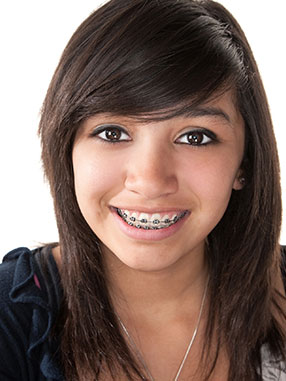
Going back to school is already an exciting (and sometimes nerve-racking) time so we don't want your braces adding to that. Our Bowling Green, OH team has compiled some helpful tips to make the process as easy and fun as possible.

1. Make sure you pack or purchase braces-friendly lunches

Try to avoid overly crunchy foods (think carrots, celery, hard crackers) especially if your teeth are sore from having your braces tightened. But you shouldn't stop eating healthful foods that fall in this category. For instance apples can be sliced into wedges or carrots can be cut into coins.

You should also avoid sticky foods like candy or gum that can and will stick in your braces like glue! Softer foods are easier on your teeth and braces, so aim to make a good portion of your lunch on the softer side.

2. Have a braces kit in your backpack or locker

Having some useful items on hand at school when you need them is one of the most helpful things you can do. Pack some wax for sores or tenderness, floss and/or flossing tools made for braces, a toothbrush and toothpaste, a small cup for rinsing, a small mirror to check for trapped food, and some lip balm if your lips tend to chap. With these tools on hand, you'll avoid most if not all braces-related nuisances!

3. Know that you're not alone

If you're feeling self-conscious about your braces, don't. Be proud of them! There are many other people your age who have braces, and if they don't have them now, they probably will in the future. Relax and know that you're on the path to a straighter and healthier smile.

If you have any questions about making your transition into "braceshood," just ask Dr. Nathan Downey or any member of our Bowling Green, OH team! We're here to help make your braces experience (and your smile) the best it can be.

The Evolution of Braces

August 31st, 2018

Did you know that even in ancient times, people wanted to improve the look and function of their smiles? Downey Orthodontics thinks of modern orthodontic appliances as sleek, efficient technology, but this was not always so! Take a look at the highlights in the evolution of braces.

Ancient Times: From Greece to Rome

  • According to The Angle Orthodontist, Aristotle and Hippocrates first thought about methods for straightening teeth between 400 and 300 BC.
  • The Etruscans, in what we now know as Italy, buried their dead with appliances that maintained spaces and prevented collapse of their teeth and jaws during life. Archaeologists have discovered mummified remains in various locations that have metal bands wrapped around the teeth.
  • A Roman tomb has also been discovered in which the teeth were bound with gold wire, including documentation on the wire’s use as a dental device.

18th Century: A French Development

  • The French dentist Pierre Fauchard is acknowledged as the father of modern dentistry. In 1728 he published a book that described various methods for straightening teeth. Fauchard also used a device known as a “blandeau” to widen the upper palate.
  • Louis Bourdet was another French dentist who published a book in 1754 that discussed tooth alignment. Bourdet further refined the blandeau and was the first dentist to extract bicuspids, or the premolar teeth between canines and molars, for the purpose of reducing tooth crowding.

19th Century: Orthodontics Defined

  • Orthodontics started to become a separate dental specialty during the early 19th century. The first wire crib was used in 1819, marking the beginning of modern orthodontics.
  • During this period, gold, platinum, silver, steel, gum rubber, vulcanite, and occasionally wood, ivory, zinc, and copper were used — as was brass in the form of loops, hooks, spurs, and ligatures.
  • Edward Maynard first used gum elastics in 1843 and E. J. Tucker began making rubber bands for braces in 1850.
  • Norman W. Kingsley published the first paper on modern orthodontics in 1858 and J. N. Farrar was the first dentist to recommend the use of force over timed intervals to straighten teeth.

20th Century: New Materials Abound

  • Edward Angle developed the first classification systems for malocclusions (misaligned teeth) during the early 20th century in the United States, and it is still in use today. Angle founded the American Society of Orthodontia in 1901, which was renamed the American Association of Orthodontists in the 1930s.
  • By the 1960s, gold was universally abandoned in favor of stainless steel.
  • Lingual braces were the “invisible” braces of choice until the early 1980s, when tooth-colored aesthetic brackets made from single-crystal sapphire and ceramics became popular

Today

As we arrive in the present, you need only look at your own braces to see how far we’ve come. Your treatment plan was probably created with a 3D digital model, and we’ve likely used a computerized process to customize your archwires. Perhaps you have clear aligners, self-ligating brackets, or highly resilient ceramic brackets with heat-activated wires.

Orthodontics has come a long way from the days of Aristotle, and even the bulky wrap-around braces of just 60 years ago. Regardless of your specific treatment plan, the development of high-tech materials and methods has made it possible for your orthodontic experience to be as effective, efficient, and comfortable as possible. Call our office in Bowling Green, OH to schedule your first orthodontic consultation!

The Importance of Wearing Your Retainer after Orthodontic Treatment

August 24th, 2018

It's the big day and your braces are finally coming off! Does that mean you are completely done? Not so fast! After you complete your treatment here at Downey Orthodontics, Dr. Nathan Downey and our team will recommend you wear a retainer, which must be worn routinely after treatment in order to hold your teeth in their proper, new position while your gums, ligaments and bones adapt. Most patients are required to wear their retainer every night at first, with many also being directed to wear them during the day. It's important to know there are different kinds of retainers, and today we thought we would explain the differences between them.

Hawley Retainers

The Hawley retainer is one of the most common types of retainers. It is a removable retainer made of a combination of a metal wire that typically surrounds the six anterior teeth and is designed to keep your teeth in place. This retainer is made from impressions of your teeth so that it fits snugly and comfortably in the roof of your mouth, while the wire and acrylic framing keeps your teeth in an ideal position. The acrylic can also be personalized with a large number of colors or patterns.

Essix (Clear) Retainers

The Essix retainer is a transparent removable retainer that fits over the entire arch of your teeth. This clear or transparent retainer fits over the entire arch of teeth and is produced from a mold. Similar to Invisalign’s clear aligner trays, Essix retainers have no metal or wires. They can also be used to produce minor tooth movements and can be helpful in prevention of tooth wear due to tooth grinding at night.

Bonded Retainers

Bonded lingual retainers are cemented directly to the inside surface of your lower canines. Dr. Nathan Downey and our team at Downey Orthodontics encourage our patients with bonded lingual retainers to be careful with their bite as the bonding material may break due to incorrect biting and cause your teeth to shift. As with removable retainers, it is important to keep your bonded retainers clean. When brushing, make sure to carefully clean the inside of your lower teeth, as well as the wire itself.

The retention phase of treatment begins when the patient’s braces are removed. Retainers are worn full time, typically for the first nine months, except while eating. Retainers should also be removed before brushing your teeth.

If you have any questions about the retainers we offer or to learn more about post-orthodontic treatment, please feel free to contact us at our convenient Bowling Green, OH office and we will be happy to answer any of your questions!

Make Your Braces Bands Work for You!

August 17th, 2018

Well, of course, they already are working for you—as an essential part of the alignment process. Rubber bands, also known as elastic ligatures, are used to secure the wires inside your brackets. But bands can be more than functional. Since the ligatures around each bracket are replaced when you visit our office, why not use that opportunity to choose a new color scheme as well?

  • Make a Statement

Bands offer a chance to coordinate your braces to an interest, team, or event. Are you a swimmer? Maybe cool blues and turquoises appeal to you. Batman forever? Black and yellow. (That will work for beekeepers, too.) Have a favorite sports team? Choosing team colors will support your team with every smile. Love your school? Show your spirit by wearing bands in your school colors. Favorite time of year? Celebrate by selecting festive bands in holiday colors.

  • Suit Your Mood

Fiery reds and oranges, tranquil blues and greens, millennial purples and pinks, or exuberant neon—you know that there are just some colors that suit your personality. Showcase that personality with your choice of band color. And if your mood changes, choose shades that express a completely different side of you.

  • Coordinate Your Colors

Match your bands to your eye color, your makeup, or the clothing colors you choose most often. If there’s a color profile that works for you, make your bands a part of it. If you don’t want everything matching, complement your coloring or clothing with a different but coordinating shade for a cohesive effect.

  • Keep a Low Profile

Most adults will stick with a monochromatic set of bands, and this might be a look that appeals to you as well. Grey and silver bands will blend nicely with silver braces. If you have clear or white brackets, you might want to test out which bands will be least noticeable. Clear bands can become discolored, and white bands can make teeth look darker. If there’s a band which mimics your own tooth color, this will be the choice for you.

  • Make Color Theory Work for You

Certain colors and tints bring out the best in your tooth color and work with your skin tones. White and yellow bands might make teeth appear duller, and any shade combination that resembles food particles (greens, browns, and black) is probably not a look you’re going for. Have fun with a color wheel and decide which colors you find most flattering.

Make your bands more than a tool—make them an accessory. There are so many colorful options available that you are bound to happen on a color scheme that just suits you. And if you change your mind? Change it up during your next visit to our Bowling Green, OH office!

Back To Top